About Susheela Arts
A legacy of strokes, tradition, and timeless beauty rooted in the heart of Alappuzha.
Our Heritage
The story of Susheela Arts began in the 1980s in the heart of Alappuzha, founded by the visionary Late Artist B. Ramesan. With a master's touch in portraits and fine drawings, Ramesan Sir built a reputation for capturing the soul of his subjects on canvas. His dedication to the craft turned Susheela Arts into a local landmark for artistic excellence, known for precision, emotion, and a deep love for the visual arts.
A Family Tradition Continued
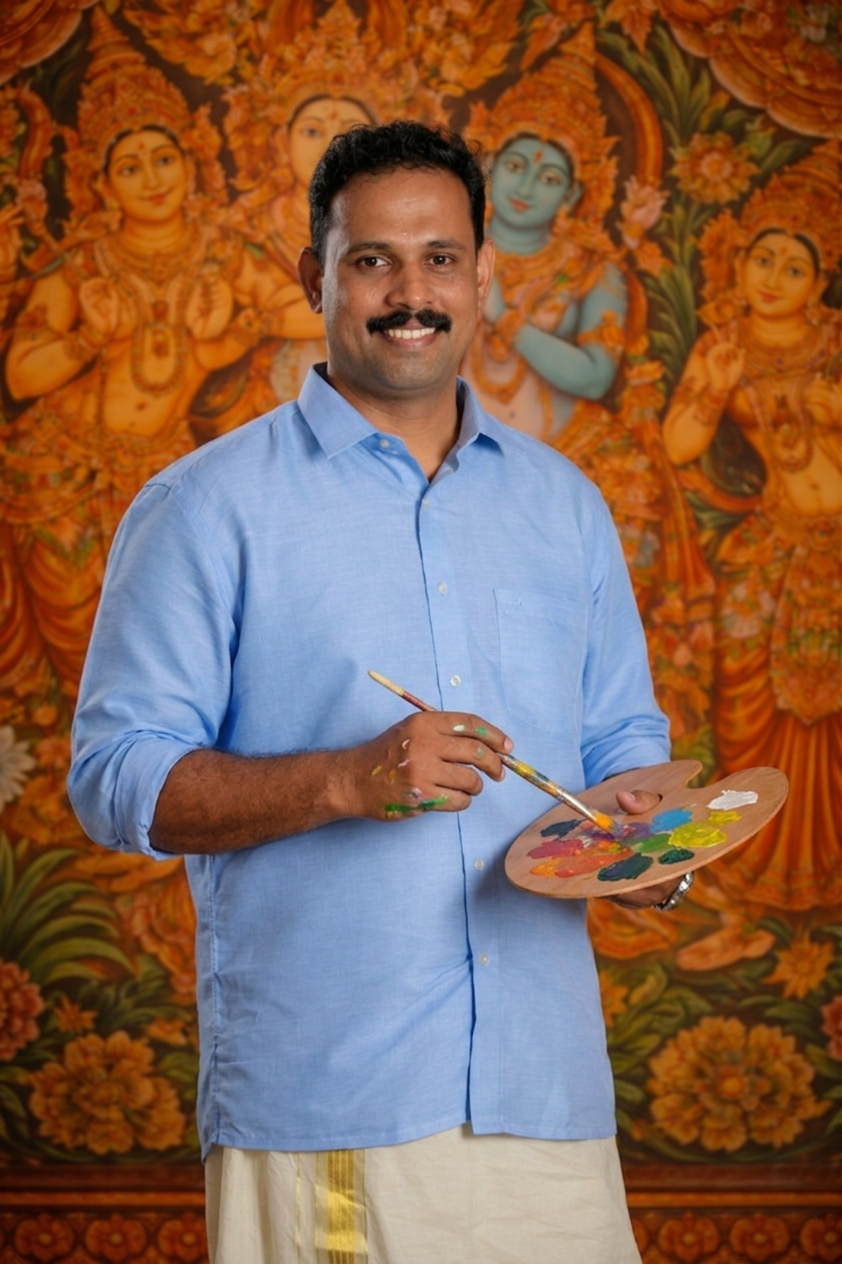
Today, that same passion flows through a new generation. The legacy of B. Ramesan is kept alive and flourishing by his son, daughter, and daughter-in-law. As a family-run collective, we bridge the gap between traditional mastery and contemporary vision. We don't just see art as a business — it is our inheritance and our greatest passion.
Our Specialization
While our roots lie in classical portraiture, Susheela Arts has evolved to become a premier destination for Kerala Mural Painting. We are dedicated to preserving and celebrating this ancient art form. Each of our pieces is a labor of love, characterized by authentic techniques true to traditional color palettes, intricate storytelling that brings legends to life with vibrant hues and rhythmic lines, and a modern elegance that adapts mural aesthetics to fit beautifully into homes, offices, and sacred spaces.
Our Mission
At Susheela Arts, we believe that art should resonate with history. Whether it is a custom-commissioned mural or a piece from our collection, we strive to bring the divine beauty of Kerala's artistic tradition into your life — just as our founder did over four decades ago.
Traditional Techniques
Color Palette
Kerala murals are known for their distinctive color scheme, traditionally using five primary colors:
- Yellow : Derived from laterite soil
- Red : Made from red ochre
- Green : Created from green leaves
- White : From lime or shell powder
- Black : From lamp black or charcoal
Painting Process
The creation of a Kerala mural involves several meticulous steps:
- Preparation of the wall surface with multiple layers of lime and sand
- Sketching the outline using charcoal or pencil
- Applying base colors in specific order
- Adding intricate details and fine lines
- Final touches and protective coating
Cultural Significance
Kerala mural paintings hold immense cultural and religious significance. They serve as visual narratives of Hindu mythology, depicting stories from the Puranas, Ramayana, Mahabharata, and other sacred texts. These artworks were not merely decorative but were considered sacred, believed to invoke divine presence and blessings.
The themes commonly depicted include:
Mythological Stories
Episodes from Hindu epics and Puranas, bringing ancient stories to life through vibrant imagery.
Deities and Gods
Portrayals of various Hindu deities, each with specific iconography and symbolic meanings.
Temple Rituals
Scenes depicting religious ceremonies, festivals, and traditional practices.
Nature and Animals
Floral patterns, animals, and natural elements that hold symbolic significance.
Today, Kerala mural paintings continue to be a source of inspiration for contemporary artists and are recognized as an important part of India's intangible cultural heritage. Efforts are being made to preserve this traditional art form and pass it on to future generations.
Preserving Tradition for the Future
While Kerala mural paintings have ancient roots, they continue to evolve and inspire. Modern artists are keeping this tradition alive by creating new works while respecting traditional techniques and themes. Our gallery showcases both classical and contemporary interpretations of this magnificent art form.